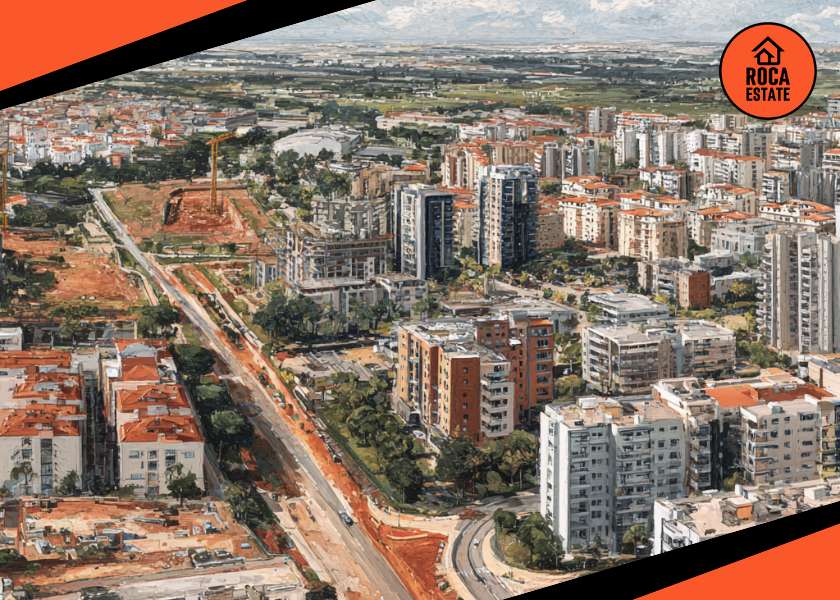
According to the latest data from Portugal’s National Statistics Institute (INE), Portugal new housing construction costs rose by 6.8% on a year-on-year basis in July 2026. This marks a 0.6 percentage point deceleration from the 7.4% growth rate analyzed in our June 2026 market update. While this moderation provides a brief respite for developers, underlying input trends reveal a structural divergence that directly impacts real estate investments in Portugal.
For institutional allocators and commercial sponsors managing Portugal property development investment, this cost regime requires recalibrating target Cap Rates, re-evaluating Gross Initial Yields, and refining underwriting assumptions across residential and mixed-use asset classes.
Breakdown of Portugal Construction Costs 2026
Data released by Statistics Portugal highlights a modest deceleration across primary production factors while confirming persistent wage-driven pressure:
- Total Index: Rose 6.8% year-on-year in July 2026, down from 7.4% in June, reflecting overall baseline stabilization.
- Portugal Construction Labour Costs: Expanded by 7.3% year-on-year, driven by workforce scarcity and structural wage increases.
- Portugal Building Material Costs: Increased by 6.3% year-on-year, influenced by persistent raw material and energy pricing across Europe.
Construction cost index for new residential dwellings
Divergence Between Material and Labor Input Costs
The 100-basis-point spread between Portugal construction labour costs (7.3%) and Portugal building material costs (6.3%) highlights structural rigidities in the domestic workforce market. While global commodity supply chains have normalized relative to post-pandemic highs, demographic constraints and intense competition for general contractors have anchored labor expenses as the primary driver of Portugal real estate development costs.
Fixed-price construction contracts have become difficult to secure. Subcontractors now frequently demand indexation clauses linked directly to national labor indexes to insulate against wage inflation.
Underwriting Real Estate Investments in Portugal
Sustained inflation across build budgets directly impacts project economics and capital deployment strategies:
- Net Yield Compression: Base models projecting 3–4% annual cost growth face immediate margin compression. When build costs outpace exit pricing, realized Net Yield falls below initial hurdle rates.
- Higher Liquidity Premium: Capital partners are demanding an elevated Liquidity Premium for forward-funding structures and ground-up developments. Investors are increasingly favoring value-add refurbishments over greenfield projects to shorten execution cycles.
- Tax Exposure & Due Diligence: Higher total CapEx affects asset depreciation schedules and overall tax exposure. Conducting thorough engineering and legal Due Diligence prior to site acquisition is critical to managing baseline risk.
What Investors Should Watch For
To navigate the next phase of the Portuguese real estate cycle, institutional investors should monitor three critical metrics:
- Labor Data Revisions: Administrative labor data undergoes periodic revisions. Subsequent INE updates often revise figures upward, making conservative financial buffers essential.
- Contractor Balance Sheets: Margin volatility among mid-tier general contractors remains high. Comprehensive counterparty Due Diligence prevents insolvency risks during construction phases.
- Permitting Schedules: Extended municipal licensing periods lengthen project hold durations, exposing developments to compounding annual construction cost inflation.
Strategic & Data-Driven Conclusion
July’s dip to 6.8% confirms a cooling trajectory rather than a structural price decline in Portugal new housing construction costs. With labor inflation at 7.3%, total build outlays will remain elevated through the remainder of 2026.
Successful allocation in Portuguese real estate requires disciplined underwriting, robust contingency buffers, and strict contractor vetting. Capital structures optimized for execution speed and risk mitigation remain best positioned to achieve premium risk-adjusted returns.
Partner with Roca Estate
Navigating complex market shifts requires local expertise and precise execution. Roca Estate provides institutional-grade advisory, asset management, and capital structuring for high-value real estate investments in Portugal. Contact our investment team today to optimize your development portfolio and secure sustainable yields.