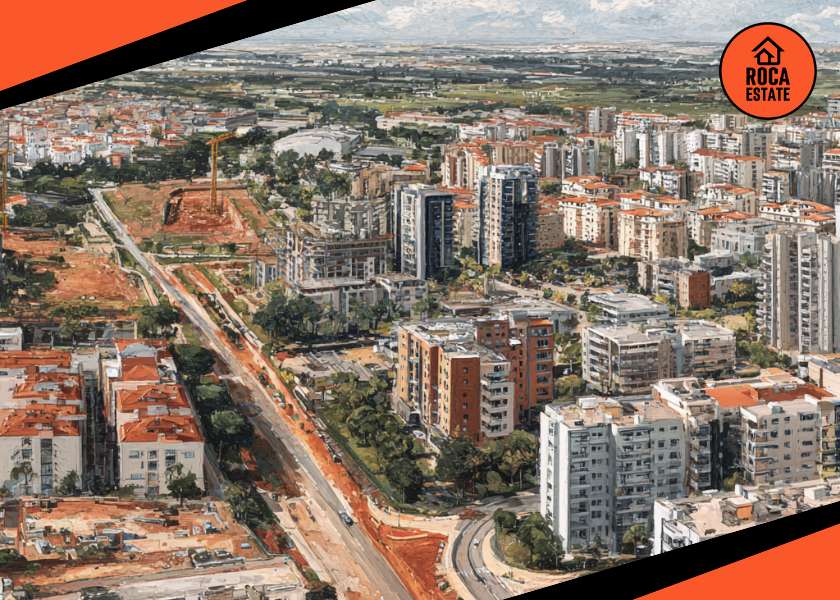
According to the latest data from Portugal’s National Statistics Institute, the Portugal housing market 2025 is characterized by concurrent expansion in transactional volumes, escalating valuation metrics, and structural deficits in supply inelasticity. These macroeconomic conditions are heavily reshaping the risk-return profiles of housing investments in Portugal for institutional allocators and private equity real estate (PERE) funds. For international investors tracking Portugal real estate prices 2025, understanding these underlying supply-demand dynamics is a prerequisite for effective capital preservation.
Transaction Mechanics and the Liquidity Premium
Market velocity accelerated noticeably throughout the period, altering liquidity conditions across major municipalities. Strategic allocations are shifting as Portugal property transactions 2025 hit 169,812 units, registering a strong 8.6% increase compared to the previous year. This volume growth highlights a steady influx of global private capital.
The transaction landscape highlights a clear division in asset class allocation:
- Capital Flight to Tangibility: Aggregate transaction value reached €41.2 billion, surging by 21.7% year-over-year.
- Existing Stock Concentration: Existing residential real estate absorbed €30.5 billion of that total capital allocation.
- New Build Allocations: Newly constructed assets saw a more modest deployment of €10.7 billion.
Concurrently, indicators for the Portugal bank valuations housing market showed a conservative decoupling from raw transaction pricing. While technical bank appraisals cleared an all-time high of over 146,000 requests, this 4.3% expansion lagged significantly behind the 8.6% transaction growth. The debt-to-transaction ratio compressed from 89.7% down to 86.2%. This expanding gap points to an increase in cash transactions or higher equity requirements. This structural shift shields the market from systemic credit shocks, yet introduces a distinct liquidity premium for non-leveraged buyers.
Regional Valuation Disparity and Cap Rate Pressures
Asset appreciation continues to challenge simple underwriting models. Regarding Portugal real estate prices 2025, the median national baseline reached €2,076 per square meter, surging 16.8% year-over-year. This rapid rise places a premium on targeted geographical selection:
- Greater Lisbon: Leading the country at €3,439/m², representing a 65.7% premium over the national baseline.
- Algarve: Reaching €3,139/m² due to sustained international premium demand.
- Setubal Peninsula: Serving as a prominent near-capital growth node at €2,596/m².
- Autonomous Region of Madeira: Showing strong secondary momentum at €2,500/m².
- Porto Metropolitan Area: Maintaining core metropolitan value at €2,305/m².
At the municipal level, Lisbon proper remains the prime luxury and core urban market, commanding €4,875 per square meter. High-end coastal enclaves like Cascais (€4,550/m²) and Oeiras (€4,187/m²) are also commanding substantial pricing premiums. This sustained escalation exerts notable pressure on Net Yield expectations, particularly in prime sub-markets where cap rates face downward pressure from intense bidding competition.
The Inelasticity of Housing Supply and Construction Pipeline
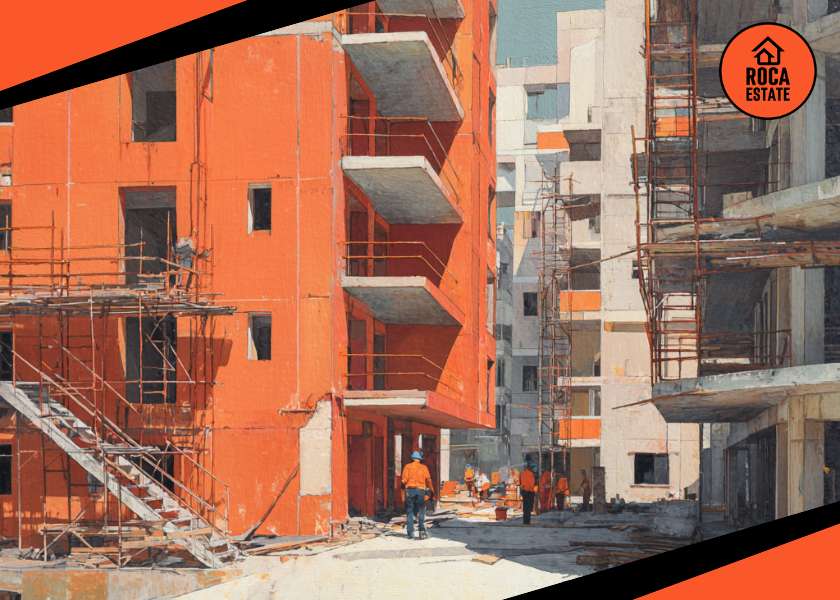
Supply constraints continue to provide structural support for high valuations. In terms of Portugal housing supply and construction 2025, approved residential units grew by 14.6% to reach 48,844 dwellings — marking the highest pipeline volume seen since 2011. However, delivery execution remains slow. Completed units stood at 30,425 individual dwellings, showing a modest 8.7% improvement.
Meanwhile, overall building completions fell by 3.0%. Developers are pivoting away from multi-family asset rehabilitation, which fell to 19.9% of the licensed total, and focusing squarely on greenfield new builds at 80.1%. For forward-looking portfolios, this slow supply expansion ensures that existing downside pricing protection remains robust.
Rental Market Trends and Yield Compression
The rental sector continues to show strong momentum. In Portugal rental market trends 2025, a total of 149,628 new leases were signed, up 5.4%. Rent levels moved higher in response to ongoing supply scarcity. Rents climbed 9.7% to a median of €9.29 per square meter.
Metropolitan demand concentrated heavily in Greater Lisbon (€14.19/m²) and Porto Metropolitan Area (€10.17/m²), which combined for 44.8% of all national leasing activity. Core hub values show Lisbon proper generating the highest rental rates at €16.88/m², followed closely by Cascais at €16.20/m². While Gross Initial Yield calculations are supported by this rental growth, overall yield expansion is being outpaced by the 16.8% spike in capital values, highlighting the reality of compressed asset yields across core urban nodes.
Forward-Looking Investment Strategic Briefing
Sophisticated market allocators must plan for several key operational shifts over the next 24 to 36 months:
- Appraisal Delays: Underwriting models should factor in the gap between market prices and conservative bank values, anticipating higher equity requirements during acquisition phases.
- Development Lag Times: Given the disparity between residential permits and building completions, project timelines require conservative contingency cushions to absorb localized labor constraints.
- Yield Optimization Re-routing: As prime yield compression continues in Lisbon and Cascais, capital should look toward secondary growth nodes like the Setubal Peninsula or Porto’s perimeter to capture stronger risk-adjusted cap rates.
Rigorous asset-level due diligence remains essential for maintaining capital preservation. Managing tax exposure and planning for longer development horizons are critical steps for protecting portfolios against potential shifts in broad market liquidity.
For expert institutional guidance and access to premium off-market portfolios, consult the specialists at Roca Estate to strategically optimize your commercial and housing investments in Portugal.