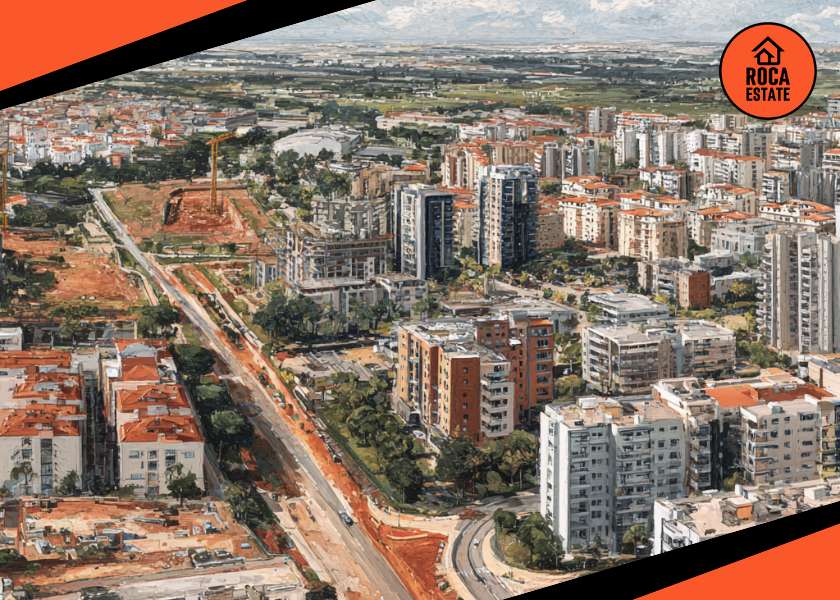
According to the latest data from Portugal’s National Statistics Institute (INE), Portugal residential construction investment faces a shifting structural landscape. While headline building permits fell 7.1% year-on-year in Q2 2026 to 6.2 thousand units, residential unit density expanded significantly. This follows our analysis in the Q1 2026 report, where we examined early signs of supply deceleration.
The new figures reveal a clear decoupling between macro project counts and total unit creation. Dwellings permitted in new residential buildings grew by 10.8% year-on-year, completely reversing the 2.2% decline recorded in Q1 2026. Similarly, completed dwellings rose 11.6%, rebounding from a 1.5% drop in the preceding quarter. Institutional capital evaluating the Portugal real estate investment market must look past surface-level permit contractions to understand unit-level momentum.
Density Over Volume: Navigating the Portugal Residential Development Market
Total project permits decreased across the board. Yet, actual unit creation accelerated. This divergence signals a pivot toward high-density multi-family structures across the Portugal residential development market. Institutional developers are consolidating land assembly, moving away from single-family projects to maximize floor-area ratios and optimize construction efficiency under tight monetary conditions.
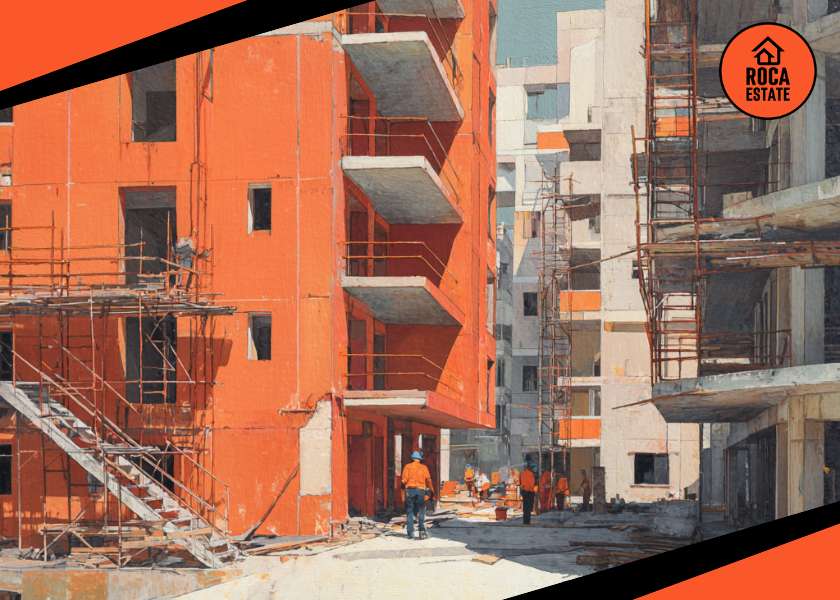
Completed Buildings – Construction
At the same time, traditional urban rehabilitation faces persistent headwinds. Key underlying data trends include:
- Subdued Renovation Velocity: Permits for renovation works fell 11.9% year-on-year in Q2 2026, following a 12.9% drop in Q1. High capital expenditures, elevated Tax Exposure, and municipal entitlement delays continue to compress margins on heritage urban projects.
- Shift to Suburban Transit Nodes: Capital allocation is steadily migrating toward ground-up developments in secondary suburban corridors, where larger site footprints offer a buffer against inflation.
- Expanding Dwellings per Project: Despite a 5.6% drop in overall new building permits, the 10.8% surge in permitted dwellings proves that developers are prioritizing scale.
- Rebounding Completion Rates: Completed residential dwellings reached an 11.6% year-on-year growth rate. This expands incoming supply faster than non-residential completions, which fell 4.2%.
The overall picture points toward institutionalization. Portugal new housing supply is increasingly driven by scaled, multi-unit assets rather than small-scale urban revamps.
Capital Allocations: Yield Dynamics and Due Diligence
The expanded housing delivery will influence Gross Initial Yield expectations across primary and secondary sub-markets.
- Cap Rate Compression in Core Hubs: Prime multi-family assets in Lisbon and Porto maintain compressed Cap Rates around 4.75% to 5.25%. Accelerated delivery prevents runaway rental inflation, keeping real Net Yield expansion tightly bound.
- Liquidity Premium in Growth Zones: Investors targeting high-growth secondary hubs — such as Setúbal, Aveiro, and Braga — can secure a higher Liquidity Premium, with Net Yields ranging from 6.50% to 7.25%. Analyzing Portugal building permits 2026 data shows that these markets will absorb the bulk of new permits over the next 18 to 24 months.
- Execution Timelines in Due Diligence: Extended construction lead times demand thorough Due Diligence. Quarter-on-quarter total building completions dropped by 1.6%. Delayed execution risks eroding projected internal rates of return (IRR) through extended holding costs.
Forward Outlook for Portugal Real Estate Development Investment
Navigating Portugal real estate development investment through late 2026 requires rigorous risk management. Capital allocators should track several operational catalysts:
- Municipal Permitting Friction: Track regional entitlement timelines. Planning backlogs in municipal offices remain the primary bottleneck for site conversions.
- Contracting Models: While material price inflation has moderated, labor costs remain elevated. Institutional sponsors must enforce strict fixed-price contracts to protect project margins.
- Affordable Housing Pipelines: Public-private initiatives designed to address the Portugal housing construction market deficit offer tax incentives and streamlined permitting for qualifying multi-family projects.
- Local Purchasing Power: Compare asking price projections against real wage trajectories to ensure stable long-term occupancy and cash flow.
Strategic Conclusion: Data-Driven Risk Management
The INE data confirms a structural evolution in Portuguese residential construction. Top-line building permits are declining, but multi-unit execution density is expanding. As urban rehabilitation slows down, ground-up institutional development is setting the pace. Successful investors will prioritize high-density residential assets with strict cost management to safeguard long-term returns.
Partner with Roca Estate to structure high-performing, data-driven real estate investments in Portugal. Contact our investment advisory team to explore full-cycle development opportunities and market analytics.