According to the latest data from INE, the Portuguese housing market began 2026 with valuations continuing to rise even as credit-linked activity declined. For investors evaluating when to invest in property in Portugal, the January figures offer a more nuanced signal than headline growth alone suggests. Following December’s release — where valuations rose alongside softening transactions — the new data confirm that momentum remains intact, but liquidity conditions are tightening.
The median bank valuation reached €2,105 per sqm in January, reflecting a 1.2% month-on-month increase and 18.7% year-on-year growth. Yet the number of bank valuations fell to 31,316, down 9.2% compared to December and 11.2% versus a year earlier.
Price Momentum Remains Broad-Based
The strength of valuations is not confined to a single segment.
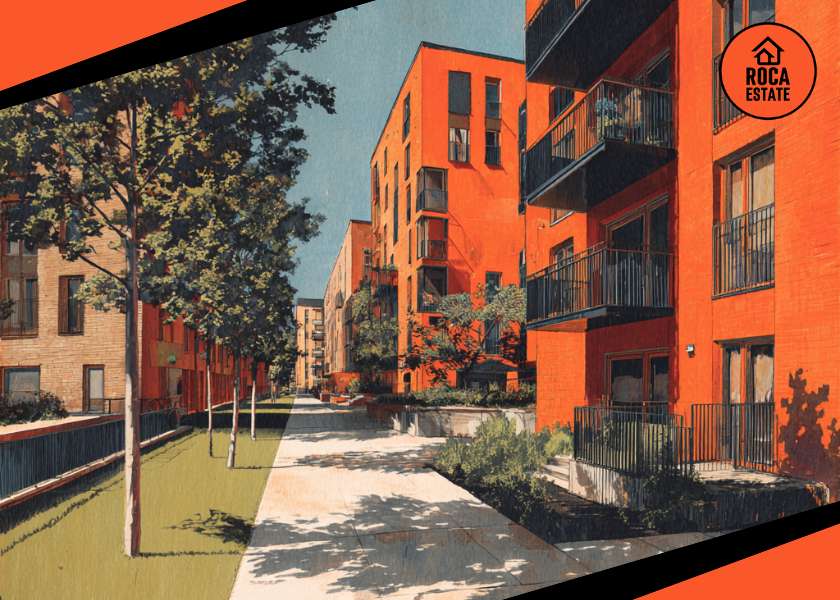
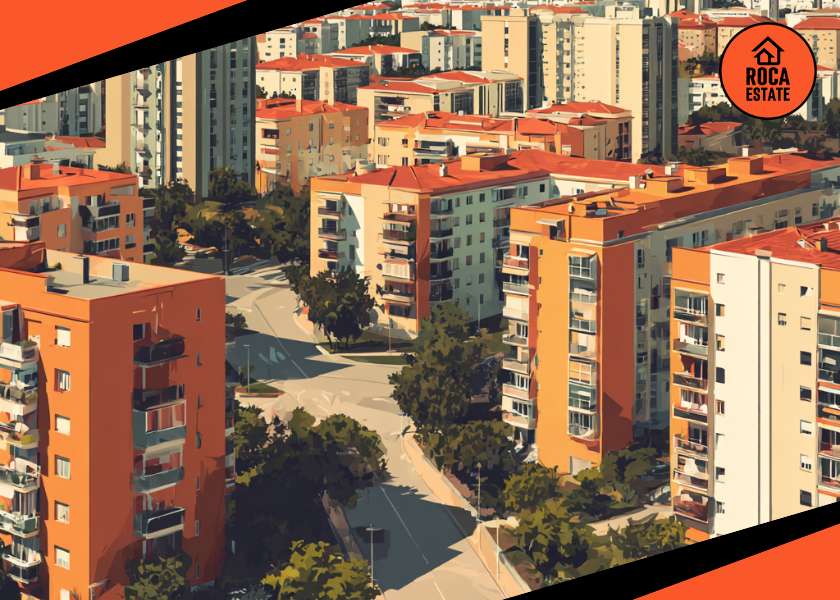
Apartments recorded a median valuation of €2,447 per sqm, reflecting a robust 22.8% annual increase. Greater Lisbon remains the pricing leader at €3,269 per sqm, followed by the Algarve at €2,796 per sqm. Notably, the Azores registered the strongest annual growth rate at 29.0%, illustrating how secondary regions are increasingly participating in the cycle.
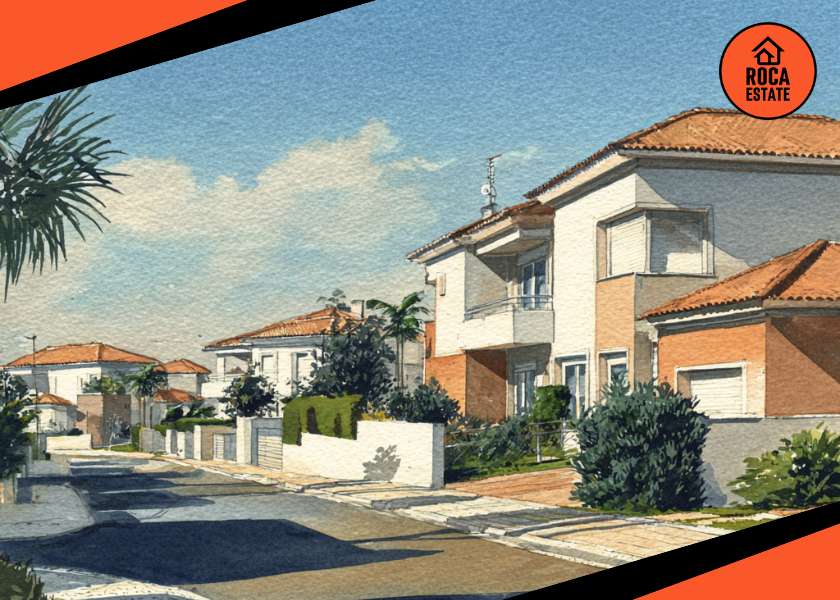
Detached houses (moradias) posted a median of €1,527 per sqm, up 15.2% year-on-year. Greater Lisbon and Algarve again lead in absolute pricing terms, but West and Tagus Valley showed the strongest annual growth at 20.2%.
The regional index (NUTS III) underscores the structural dispersion within the Portuguese housing market. Greater Lisbon stands 52.4% above the national median, Algarve 31.9%, and the Setúbal Peninsula 21.7%. Meanwhile, interior regions such as Terras de Trás-os-Montes and Beiras and Serra da Estrela trade at discounts exceeding 50% to the national benchmark.
This widening gap between coastal and interior valuations continues to shape investment strategy, land banking decisions, and forward development models.
Activity Softens — A Signal Worth Monitoring
While valuations rose, appraisal volumes declined sharply. January’s 31,316 valuations reflect the lowest level in several months, with apartments accounting for 19,429 and houses 11,887.
Because bank valuations are directly linked to mortgage applications, this contraction may signal:
- Moderating transaction volumes
- Buyer caution amid financing costs
- A shift toward cash-based transactions not captured in credit data
Importantly, the methodology note clarifies that the index reflects valuations tied to credit applications and is calculated on a rolling three-month basis. It is therefore smoother than transaction price data but may lag turning points.
The key question for investors is whether this decline in appraisal activity represents temporary seasonality or the early stage of demand normalization.
Structural Forces Behind the Data
Three structural dynamics continue to support the Portuguese housing market:
- Supply constraints in prime coastal regions, especially in Lisbon metropolitan areas and the Algarve.
- Persistent international demand, both lifestyle-driven and investment-oriented.
- Construction cost stickiness, limiting the scope for rapid price corrections.
However, valuation growth near 19% annually is difficult to sustain indefinitely. The slight moderation from December’s 19.1% to January’s 18.7% annual growth suggests that the market may be entering a more controlled phase.
Forward-Looking Implications for Investors
Investors assessing opportunities in the Portuguese housing market should monitor three leading indicators over the coming months:
- Appraisal volumes: continued declines would likely precede softer transaction data.
- Regional dispersion: sustained outperformance of Lisbon and Algarve could signal concentration risk.
- Segment differentiation: apartment valuations are rising faster than houses; shifts here may reflect demographic demand patterns.
A stabilization scenario would imply slower price growth but resilient valuations in core markets. A sharper contraction in appraisal numbers, however, would point to liquidity tightening and potential pricing recalibration in secondary regions first.
Strategic Conclusion
January’s data reinforce a key theme: the Portuguese housing market remains structurally strong, but momentum is becoming more selective.
Prices are still rising. Liquidity is not.
For disciplined investors, this is the stage of the cycle where underwriting standards matter most. Conservative leverage, sensitivity analysis on exit pricing, and careful regional allocation become critical. Markets rarely reverse abruptly when supported by structural demand, but they do rebalance.
The coming quarter will be decisive. If appraisal activity stabilizes while valuations moderate gradually, the market may transition into a sustainable expansion phase. If activity continues to contract, risk premiums should widen — particularly outside Lisbon and the Algarve.
In either case, investors who treat monthly valuation releases as forward indicators — not backward confirmations — will be better positioned to navigate the next phase of the Portuguese housing market cycle.
For investors seeking structured analysis and disciplined entry strategies, Roca Estate provides data-driven guidance tailored to current market conditions. If you are considering how to invest in property in Portugal, our team can help you assess risk, regional positioning, and long-term value creation opportunities.