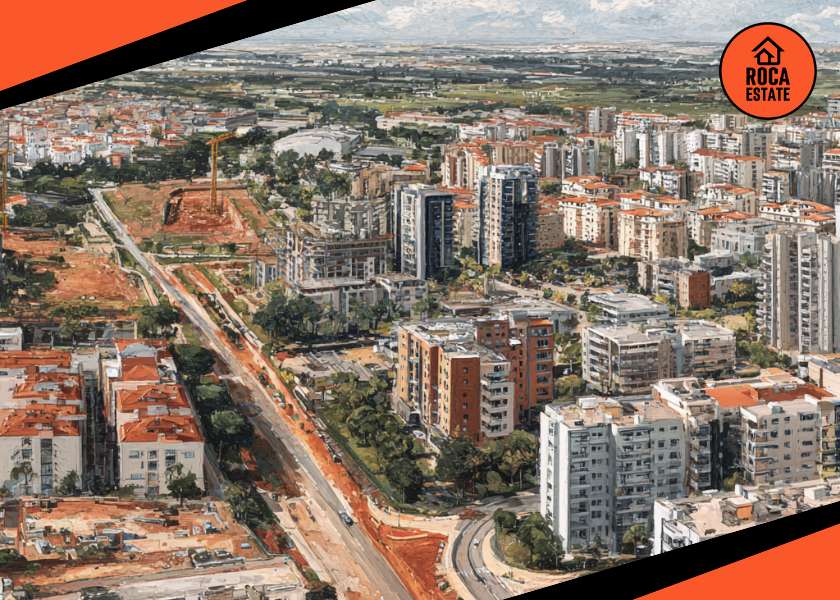
Portugal construction market trends continue to offer useful signals for anyone planning to invest in property in Portugal. According to the latest data from INE, construction activity is still growing, though at a slower pace, and this shift is becoming an important indicator for how the market may evolve heading into 2026.
For real estate investors, the October figures highlight where momentum is holding and where pressures are beginning to build. These monthly movements help shape expectations around development costs, supply timelines, and overall market stability, making them essential for forward-looking investment decisions.
Production Growth Slows, but Sector Momentum Continues
The latest Portugal construction market trends reveal a 2.9% year-on-year increase in construction production, a slight slowdown from September. Beneath this headline figure, the split between building activity and civil engineering is increasingly relevant for investors:
- Building construction eased to 3.2%, down from 4.0%.
- Civil engineering strengthened to 2.4%, up from 1.8%.
This divergence suggests a shift in market drivers:
- Private-sector building activity may face tighter timelines and margins, especially in areas exposed to higher financing costs.
- Infrastructure-linked segments show improving stability, potentially creating opportunities in logistics, industrial land, and assets positioned near public investment corridors.
These dynamics should remain a central part of any investor’s dashboard when reading Portugal construction trends in early 2026.
Employment and Wage Indicators Reflect Cost Pressures
Employment growth in the construction sector moderated to 2.2%, while wages grew 7.8% year-on-year. As shown in the chart on page 2, wage growth continues to outpace employment growth.
For investors evaluating project feasibility, this matters:
- Labour costs are easing slowly, but wage inflation remains structurally elevated.
- Renovations and labour-intensive developments could face rising execution costs, especially in city centres.
Monitoring how these factors evolve in future Portugal Construction Market Trends releases will help investors gauge the direction of construction costs and the likely impact on supply.
Data Revisions and Market Reliability
INE adjusted previous months’ indicators, with small downward revisions to employment and wage data (page 4). The October release reflects a solid 87.6% response rate, higher than a year ago.
This signals improving data consistency, a useful foundation for decision-making when tracking Portugal construction market month after month.
Key Signals to Watch as 2026 Approaches
Investors should keep an eye on several forward-looking indicators:
1. Civil Engineering Momentum
If infrastructure spending continues to gain traction, assets near new public works could see strengthened demand, benefiting logistics, industrial, and redevelopment projects.
2. Wage Growth Relative to Production Growth
A sustained gap — high wage growth paired with slower output — could delay new developments and tighten future residential supply.
3. Slowdown in Building Construction
If building activity continues to moderate, this may lead to future supply shortages, a trend worth noting for rental and long-term yield investors.
4. Financing Conditions
Slower production can signal tighter lending. If conditions loosen in 2026, shelved projects may restart, shifting market absorption rates.
Strategic Takeaway for Real Estate Investors
The Portugal construction market trends for October point to a sector balancing ongoing growth with emerging cost and demand pressures. For investors, the opportunity lies not in broad exposure but in selective positioning:
- Focus on areas benefiting from public investment or infrastructure development.
- Reassess project budgets with updated wage and production trends.
- Consider how slowing building activity may tighten supply in key urban markets.
- Preserve liquidity for opportunities arising from delayed or repriced developments.
As always, the value is in watching direction as much as level. January’s upcoming release will clarify whether October’s shifts were temporary or the early signs of a new phase in Portugal’s construction cycle.
If you’re exploring when and where to invest in property in Portugal, Roca Estate can guide you with market-driven insights and tailored opportunities. Connect with our team to make your next investment move with confidence.