Portugal Construction Cost Trends continue to shape investment decision-making as 2025 closes, with implications that extend well beyond residential development. According to the latest data from Instituto Nacional de Estatística (INE), construction costs show signs of short-term moderation, even as underlying pressures remain firmly in place. For investors assessing commercial strategies, these figures provide an important reference point for pricing risk, timing capital deployment, and evaluating whether current conditions support efforts to invest in income property in Portugal.
This monthly update places the newest data within a broader market context relevant to Portugal’s commercial real estate sector. While easing headline inflation offers some relief, elevated labour costs and uneven materials pricing continue to influence development feasibility and asset repositioning strategies. For income-focused investors, understanding how construction cost dynamics evolve is increasingly critical, not only for underwriting new projects but also for assessing refurbishment risk, replacement cost, and long-term return stability in a higher-cost environment.
Annual construction cost growth eases, but remains elevated
According to the December 2025 release, construction costs rose 4.0% year-on-year, down from 4.9% in November. This moderation confirms a gradual cooling trend in construction cost inflation in Portugal, following several years of pronounced volatility.
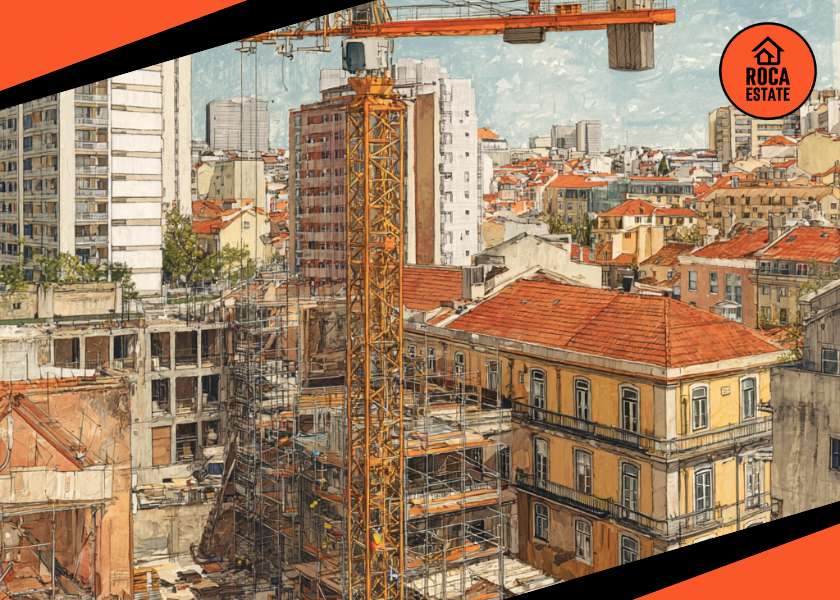
On a monthly basis, costs declined by 0.7%, reflecting a short-term correction rather than a structural shift. While welcome, this decline does little to offset the cumulative increases absorbed by developers since 2022. For investors underwriting new schemes, real estate development costs in Portugal remain materially higher than pre-pandemic norms.
Labour costs continue to shape development risk
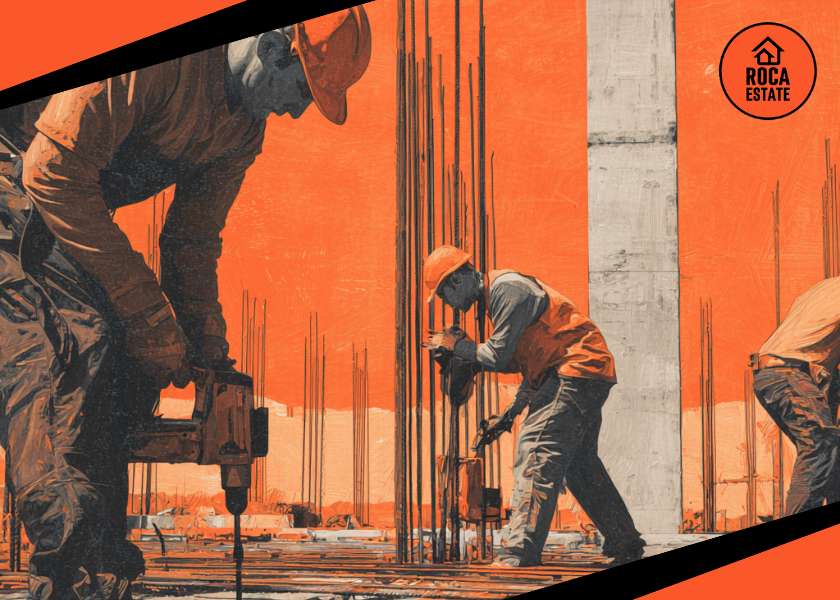
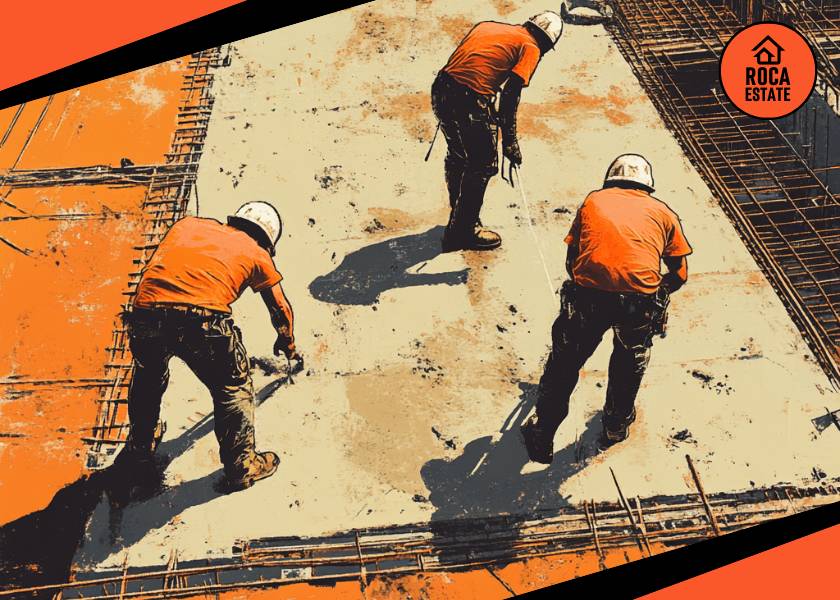
Labour remains the primary driver of construction cost growth. In December, labour costs were up 7.7% year-on-year, accounting for the majority of the annual increase. Although this represents a slowdown from previous months, wage pressure continues to define feasibility across office, logistics, hospitality, and mixed-use developments.
For real estate investment risk in Portugal, this reinforces several structural considerations:
- Build timelines are increasingly critical to cost control.
- Fixed-price contracts are harder to secure without premiums.
- Refurbishment and repositioning strategies retain a relative cost advantage over ground-up development.
From an investment perspective, labour dynamics now sit alongside financing costs as a core underwriting variable.
Materials prices stabilize, but volatility persists
Materials inflation remains subdued at the headline level, rising just 0.8% year-on-year. However, dispersion across categories remains high. Sharp price increases in glass and sanitary components contrast with declines in insulation and finishing materials.
For investors active in Portuguese commercial real estate, this variability reinforces the need for asset-specific cost assumptions. Broad indices provide useful direction, but they no longer substitute for detailed cost planning, particularly in projects with technical or sustainability-driven specifications.
A higher cost baseline for commercial real estate
On an annual average basis, construction costs increased 4.0% in 2025, above the 2024 average. While far below the peaks of 2022–2023, this confirms that Portugal construction cost trends have reset at a structurally higher level.
This has direct implications for commercial property investment in Portugal:
- Replacement cost assumptions should remain conservative.
- Development-led yield compression strategies face tighter margins.
- Exit values may be more sensitive to rental growth assumptions than in prior cycles.
What investors should monitor next
Looking ahead, investors should closely track three interconnected factors:
- Labour market conditions, particularly in skilled trades, where renewed wage acceleration could quickly reintroduce cost pressure.
- Public-sector construction pipelines, which may compete for capacity and impact private sector pricing.
- Capital markets stability, as any easing in financing conditions could partially offset elevated construction costs.
Together, these elements will determine whether the current moderation in construction cost inflation in Portugal evolves into a sustained trend.
Strategic conclusion: discipline over expansion
The latest data suggests that Portugal construction cost trends are stabilizing, not normalizing. For investors, this is a signal to remain selective rather than defensive. Projects supported by strong occupier demand, realistic timelines, and robust contingency planning remain viable. Those dependent on rapid cost compression do not.
As 2026 begins, successful real estate investment in Portugal will increasingly favor disciplined execution, detailed cost visibility, and proactive risk management over scale-driven expansion.
For investors seeking clarity amid shifting cost dynamics, Roca Estate provides data-driven guidance tailored to today’s market conditions. If your objective is to invest in income property in Portugal, our team helps identify resilient opportunities with a clear focus on risk-adjusted returns and long-term value creation.