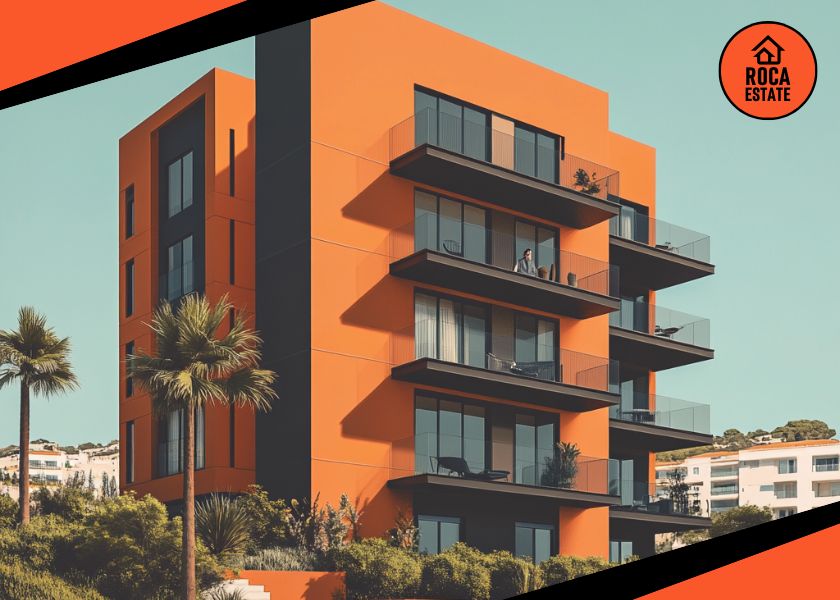
Introduction: Income Houses in Portugal – A Strategic Investment in a Resilient Market
Income houses – also referred to as multifamily or build-to-rent residential properties – have emerged as a key asset class in Portugal’s commercial real estate landscape. With demand for long-term rentals increasing across both urban centers and secondary markets, these properties now offer a compelling combination of stable returns, risk diversification, and scalable investment potential.
In 2024, Portugal’s real estate market demonstrated resilience despite broader European economic uncertainties. Total real estate investment volume reached €2.5 billion, with approximately 24% of that focused on residential income-generating assets, according to CBRE’s Market Outlook 2025. This growth is largely driven by structural factors: rising urban population density, constrained housing supply, and shifting regulatory frameworks that increasingly favor long-term residential leases over short-term tourism rentals.
For commercial investors, income houses represent a strategic shift towards a more secure, yield-oriented investment profile, particularly in markets where traditional sectors such as retail and office have faced pricing pressure or usage transformation. Roca Estate has identified multifamily real estate as a high-potential segment within Portugal’s property sector, supported by long-term macroeconomic trends, demographic shifts, and targeted government incentives.
This article examines the fundamentals of income house investments in Portugal, outlines key market trends, and offers insights into top-performing regions. The goal is to provide commercial real estate investors with a data-driven briefing that supports informed decision-making and long-term portfolio strategy.
What Are Income Houses?
Income houses, also known as multifamily properties, are a subset of commercial real estate consisting of multiple residential units held under a single title for the purpose of generating recurring rental income. In the context of Portugal’s real estate investment market, income houses are increasingly recognized as a core asset class, offering long-term rental stability and scalability in urban and suburban markets.
Types of Income Houses
Income houses in Portugal generally fall into three main categories:
- Multifamily Buildings
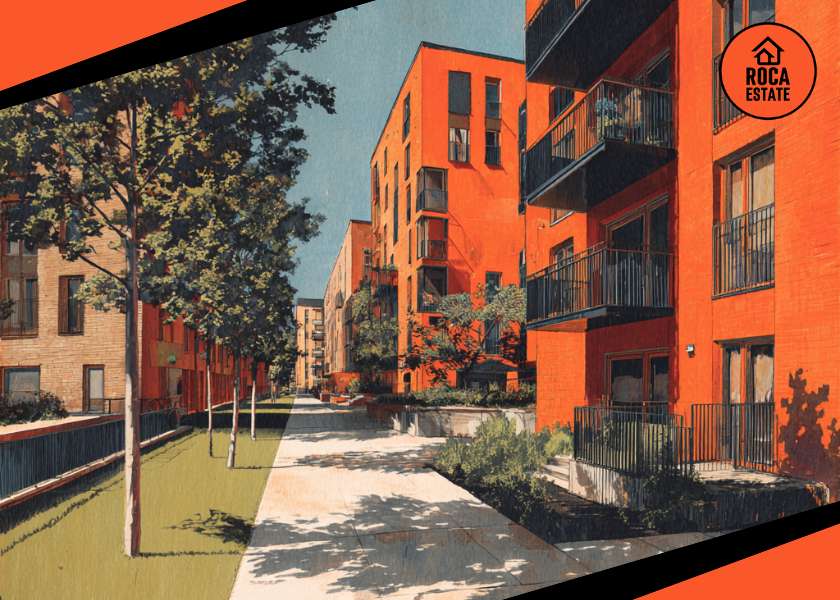
Entire buildings with multiple self-contained rental units, typically held by a single owner or investment group. These are commonly found in Lisbon, Porto, and other high-demand areas. - Mixed-Use Buildings
Properties that combine residential units with commercial space (e.g., ground-floor retail). These offer diversified cash flow and are often located in urban centers or revitalized neighborhoods. - Build-to-Rent Developments
Purpose-built residential complexes are designed specifically for long-term leasing. These are emerging in markets like Braga and Setúbal, supported by local government urban renewal incentives.
Income Houses as Commercial Real Estate Assets
Though they consist of residential units, income houses are classified as commercial real estate when they are owned and operated for investment purposes. Unlike individual residential properties, they are assessed based on income-generating performance, using metrics such as:
- Net Operating Income (NOI)
- Capitalization Rates
- Gross Rental Yields
- Occupancy Rates
These metrics allow investors to evaluate income houses alongside other commercial real estate assets such as office buildings or logistics centers.
Advantages in an Investment Portfolio
From a portfolio strategy perspective, income houses offer:
- Steady cash flow through diversified tenancies
- Risk reduction via lower correlation with market cycles compared to office or retail
- Operational efficiencies when scaled across multiple units under a single ownership and management structure
Income houses are especially relevant in Portugal, where demographic trends and housing shortages continue to drive demand for mid- to long-term rental housing. According to Savills Investment Outlook 2024, the residential leasing segment is forecasted to be one of the most resilient in terms of performance and investor interest through 2026.
Why Investors Are Interested in Income Houses in Portugal
Investor interest in income houses in Portugal is growing due to a combination of favorable market fundamentals, evolving demographic trends, and structural shifts in the rental market. Multifamily properties offer a resilient income stream in a period where demand for long-term rental housing continues to rise, especially in urban and semi-urban areas. For both institutional and private investors, this segment is now viewed as a reliable alternative to more cyclical commercial assets.
1. Growing Rental Demand
Portugal has seen a sharp rise in long-term rental demand over the past five years, driven by:
- Urban population growth in cities like Lisbon, Porto, Braga, and Setúbal
- Increased foreign residency due to visa programs and lifestyle migration
- Limited housing supply, particularly in the affordable and mid-range segments
According to Portugal Homes and The Portugal News, average residential rents rose by over 10% year-on-year in Lisbon and Porto in 2024, outpacing inflation and wage growth. With the government restricting short-term rental licenses in major cities, supply has shifted towards the long-term rental market, further supporting income house demand.
2. Attractive Rental Yields
Multifamily properties in Portugal continue to offer solid gross rental yields compared to other Western European markets. These yields vary by location, but remain above the EU average, particularly in secondary cities.
| City | Gross Rental Yield (%) | Avg. Rent Growth YoY (2024) |
| Lisbon | 5.0% – 6.5% | 9.2% |
| Porto | 5.5% – 7.0% | 10.6% |
| Braga | 6.5% – 7.5% | 8.9% |
| Setúbal | 6.0% – 7.0% | 7.3% |
| Cascais | 4.5% – 5.5% | 8.1% |
| Faro | 5.8% – 6.8% | 9.0% |
(Sources: Global Property Guide, Portugal Buyers Agent, CBRE Market Overview 2025)
These rental yields are particularly appealing when benchmarked against low-risk government bonds or other fixed-income instruments, especially in a high-interest rate environment where investors seek real returns above inflation.
3. Portfolio Diversification and Stable Returns
Income houses offer reliable cash flow across economic cycles. Their correlation with GDP growth or retail sales is lower than that of other commercial assets, making them an effective hedge in a diversified real estate portfolio.
Key benefits include:
- Predictable income from multiple tenancies
- Reduced vacancy risk due to broad market demand
- Resilience in periods of economic contraction, as housing remains a necessity
In addition, the professionalization of Portugal’s rental sector has made it easier to manage multifamily assets efficiently, with increasing availability of local property management services and institutional-grade asset servicing.
Where to Invest: Top Locations in Portugal for Income Houses
Portugal offers a diversified and data-supported investment landscape for income houses, with performance varying across metropolitan regions and secondary cities. For commercial real estate investors, selecting the right location is critical to optimize rental yields, manage risk, and capture long-term value appreciation. This section outlines the most attractive regions based on current rental values, growth rates, and rental market dynamics using the latest data from Statistics Portugal and leading market reports.
Lisbon: High Demand, High Rent, Lower Yield
Lisbon remains the most expensive rental market in Portugal. As of Q4 2024, the median rental value in Lisbon reached €16.04/m², the highest in the country, with modest year-on-year growth of 3.4%, below the national average of 9.3%.
Key investment insights:
- Strong rental demand from students, professionals, and expats
- High property values, leading to compressed gross rental yields (5.0%–6.5%)
- Stability is driven by urban housing shortage, and regulations favoring long-term rentals
While the yield profile may be lower, the capital remains a safe haven for institutional investors focused on asset preservation and steady returns.
Porto: Yield Advantage with Urban Growth Momentum
Porto is currently outperforming Lisbon in terms of rental yield and market growth. In Q4 2024, the median rent was €12.58/m², with strong annual growth of 7.3%. Suburbs such as Maia and Vila Nova de Gaia reported even higher growth rates (up to 15.8% YoY) and offer affordable entry points.
Investment advantages:
- Higher yields (5.5%–7.0%)
- Expanding urban renewal and infrastructure investments
- Rising tech sector and university-driven demand
Porto is ideal for mid- to long-term investors seeking balanced risk and return through multifamily assets.
Cascais and Faro: Premium Niches with Mixed Yield Profiles
Cascais, a lifestyle and expat hub, reported median rents of €15.31/m² in H2 2024, according to INE data. While rental growth is strong (approx. 8.1% YoY), property values are also high, resulting in more modest yields (~4.5%–5.5%).
Faro, a rising market in the Algarve, showed median rents of €10.39/m² with strong YoY rental value growth of 14.3%, outpacing national performance.
Cascais suits capital preservation and premium tenant strategies, while Faro offers growth-driven upside for mid-cap multifamily portfolios.
Secondary Cities: Braga, Coimbra, and Setúbal
Portugal’s secondary cities are increasingly attractive for income house investors seeking higher returns and lower acquisition costs.
Braga
- Median rent: ~€7.5–8.0/m²
- Year-on-year rent growth: ~9%
- Strong university population and a growing local economy
Coimbra
- Median rent: €7.96/m²
- Year-on-year growth: 10.1%
- Stable demand driven by the University of Coimbra and the healthcare sector
Setúbal
- Median rent: €10.35/m²
- Year-on-year growth: ~7%
- Strategic location near Lisbon with a growing logistics and industrial base
These markets offer 6.0%–7.5% gross rental yields and benefit from increasing government support for affordable housing, urban renewal, and infrastructure development.
Summary Table: Top Locations and Performance Indicators
| Location | Median Rent (€/m²) | YoY Growth (%) | Gross Rental Yield (est.) |
| Lisbon | 16.04 | 3.4 | 5.0% – 6.5% |
| Porto | 12.58 | 7.3 | 5.5% – 7.0% |
| Cascais | 15.31 | 8.1 | 4.5% – 5.5% |
| Faro | 10.39 | 14.3 | 5.8% – 6.8% |
| Braga | ~7.5 – 8.0 | ~9.0 | 6.5% – 7.5% |
| Coimbra | 7.96 | 10.1 | 6.0% – 7.0% |
| Setúbal | 10.35 | ~7.0 | 6.0% – 7.0% |
(Sources: INE House Rental Statistics Q4 2024, Global Property Guide, CBRE, Savills Investment Outlook 2024)
Key Market Trends and Policy Factors Impacting Income Houses in Portugal
For commercial real estate investors evaluating income houses in Portugal, understanding policy dynamics and macro trends is essential. Over the past 24 months, Portugal’s regulatory and demographic landscape has shifted in favor of long-term rental models, especially in urban and peri-urban areas. These shifts directly influence yield stability, operational risk, and market entry timing for income-generating multifamily properties.
Government Incentives Supporting Long-Term Rentals
The Portuguese government has introduced several housing-focused initiatives to stimulate supply in the rental market and redirect investment from short-term tourism lets to stable residential use:
- Mais Habitação Program (€2.22 billion): Launched in 2024, this national housing strategy includes subsidies for affordable rental development, tax incentives for long-term leasing, and support for urban renovation projects.
- VAT Reductions on Renovation: Applicable to certain urban rehabilitation projects, particularly those in ARUs (Urban Rehabilitation Areas), providing cost advantages for investors redeveloping income properties.
- Municipal Tax Incentives: Several municipalities (e.g., Braga, Setúbal) offer IMI tax reductions for multifamily properties under long-term lease agreements, improving net returns.
These incentives align with EU housing policy and make Portugal one of the most investor-friendly jurisdictions for residential income assets in Southern Europe.
Regulatory Shift: Decline of Short-Term Rental Licensing
Portugal has begun to restrict the issuance and renewal of AL (Alojamento Local) licenses in core urban zones, particularly in Lisbon and Porto. The government’s goal is to cool excessive tourism pressure and free up residential stock for local and long-term tenants.
Implications for investors:
- Reduced competition from short-term rentals in city centers
- Increased stability in monthly cash flows
- Improved occupancy rates for licensed income houses
This regulatory trend supports the shift from speculative short-term rentals to institutional-grade residential leasing – a favorable condition for income house investors focused on yield reliability and compliance.
Digital Nomads and Remote Workers Are Reshaping Demand
Portugal continues to be a top destination for digital nomads, remote professionals, and long-term foreign residents, largely due to its cost of living, infrastructure, and residency programs.
- Lisbon, Porto, Cascais, and Faro are attracting high-income remote workers seeking furnished rentals in professionally managed multifamily buildings.
- According to the PwC Emerging Trends in Real Estate 2025, this demographic is contributing to the rise of “residential-as-a-service” models, which combine flexible lease terms with community amenities – a growing feature in new build-to-rent developments.
This trend reinforces long-term demand for well-located, managed income houses, particularly in cities that offer high lifestyle value and digital infrastructure.
Urban Demographics and Demand-Side Pressure
- Portugal’s population in urban areas is increasing, with cities like Braga and Coimbra expanding due to internal migration and student populations.
- Housing supply remains constrained in central districts, especially for middle-income tenants.
- The INE Rental Market Report shows median rents increasing in nearly all major regions, with national rents rising 9.3% YoY in Q4 2024 – a trend expected to continue into 2025.
This supply-demand imbalance enhances the long-term fundamentals for income houses as both a stable and growth-oriented asset class.
Investor Considerations: What to Know Before Investing in Income Houses in Portugal
While the fundamentals for income houses in Portugal are strong, successful execution requires understanding the operational, legal, and market-specific risks involved. Investors – particularly those entering from abroad – should take a structured approach to risk management and asset performance optimization. This section outlines the key factors to evaluate before committing capital to multifamily real estate in Portugal.
1. Property Management and Operational Complexity
Income houses require more active management than other commercial asset types. Investors must plan for:
- Maintenance and CapEx cycles: Building upkeep, renovations, and compliance with building codes, especially in historic or mixed-use properties.
- Tenant management: High occupancy rates depend on professional leasing, tenant screening, and dispute resolution.
- Vacancy and turnover costs: Managing lease renewals, tenant turnover, and unit downtime impacts net operating income (NOI).
Partnering with a local property management firm can significantly reduce operational friction. For international investors, this ensures local language support, access to trades, and faster resolution of tenant issues – all critical for preserving rental yield.
2. Legal and Regulatory Compliance
Portugal has specific legal frameworks governing landlord–tenant relationships, and recent changes have introduced stricter compliance measures:
- Lease contracts must follow standardized templates and are typically registered with tax authorities.
- Notice periods, rent updates, and eviction processes are governed by national law and favor tenant protection in long-term contracts.
- Licensing and usage classification: Properties must be correctly licensed for long-term rental (not AL tourist use), particularly in controlled zones like Lisbon or Porto.
Investors should work with real estate legal experts and licensed property consultants to ensure full compliance with the law, especially when remodeling or acquiring older buildings.
3. Taxation and Financial Structuring
Real estate investors in Portugal must consider:
- IMI (Municipal Property Tax): Annual tax levied on all properties, with reductions possible for rehabilitated assets or affordable rental uses.
- AIMI (Additional Property Tax): Applies to high-value residential properties, particularly those held by entities without operational business.
- Capital gains and income tax: Non-residents face specific rules depending on residency and legal structure.
Tax structuring, especially when investing through a fund, SPV, or corporate vehicle, should be aligned with Portugal’s double taxation treaties and real estate-specific exemptions.
4. Market Entry and Acquisition Risk
- Due diligence is essential in older buildings, especially in central Lisbon and Porto, where structural issues, zoning restrictions, or co-ownership complications can emerge.
- Valuation gaps can exist between listed and transacted prices. Working with local market experts who have insight into off-market activity can help investors identify more competitively priced opportunities.
Many investors benefit from acquiring underutilized or partially tenanted properties, which can be upgraded and stabilized for long-term performance under a value-add strategy.
Income Houses in Portugal as a Long-Term Investment Strategy
Income houses in Portugal represent one of the most resilient and strategically attractive segments in the commercial real estate market today. Backed by rising rental demand, a supportive regulatory shift toward long-term leasing, and solid macroeconomic fundamentals, multifamily properties offer investors a compelling combination of stable cash flow, portfolio diversification, and inflation protection.
From high-performing urban centers like Lisbon and Porto to fast-growing secondary cities such as Braga, Setúbal, Coimbra, and Faro, opportunities are emerging across the country for those with a long-term view. The latest data from Statistics Portugal confirms that median rents are rising in nearly every major region, with national values increasing 9.3% year-on-year in Q4 2024, while leasing activity remains strong across all sub-regions.
However, unlocking value in income houses requires more than capital. It demands deep local expertise, regulatory understanding, and operational execution. This is where Roca Estate delivers a competitive advantage.
Work With Roca Estate
Whether you’re a private investor or institutional buyer, Roca Estate provides tailored investment advisory services in multifamily and commercial real estate across Portugal. We support you through:
- Asset sourcing, including off-market opportunities
- Due diligence and legal compliance
- Yield optimization through professional property management
- End-to-end investment support, from acquisition to operation
Start building your income property portfolio in Portugal today. Contact Roca Estate for expert guidance on available income house investments.
Sources: Instituto Nacional de Estatística (INE) – (House Rental Statistics at Local Level – 4th Quarter 2024), CBRE – (Market Outlook 2025: Portugal), Savills – (Investment Outlook 2024 – Trends 2025 (Portugal)), PwC & ULI – (Emerging Trends in Real Estate Europe 2025), Reuters – (Portugal Launches €2.22 Billion Housing Package), Global Property Guide – (Portugal Rental Yields), Portugal Buyers Agent – (Portugal Rental Market Overview) Portugal Homes – (Rental Prices in Portugal Rise), The Portugal News – (Housing Prices Set to Rise Until 2026).